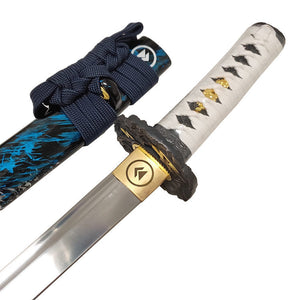
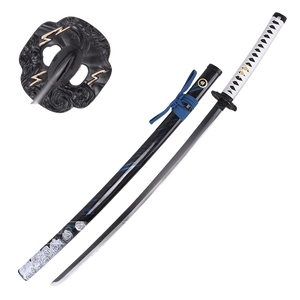
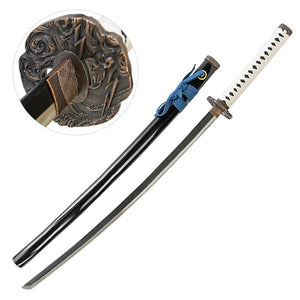
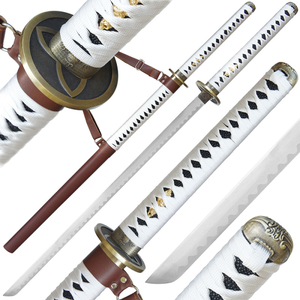
The katana is the most recognisable sword ever made. A single curved edge, a long two-handed grip, a wooden scabbard worn edge-up through the belt: a silhouette so distinctive that it reads as "samurai" instantly, in any culture, to anyone.
What most people do not realise is how much variety sits inside that silhouette. A hand-forged katana built to cut is a very different object from a display piece built to hang on a wall, and both are different again from a fandom katana designed to match a specific character's blade. They suit different buyers, different budgets and different purposes.
This page covers the full katana and samurai sword range at The Sword Stall: every blade type and every build quality. All UK stock, held in our warehouse in Bacup, Lancashire.
Shop by type: Hand-forged katana · Display katana · Mini katana · Katana sets · Wakizashi · Tanto
Katana or samurai sword: is there a difference?
The two terms get used interchangeably, and for shopping purposes they mean the same thing. Technically, "samurai sword" is the broader category. It covers every blade the samurai carried, including the wakizashi, the tanto and the older tachi. "Katana" refers specifically to the long curved primary sword.
If you are searching for a samurai sword and you picture the long curved blade worn edge-up, you are picturing a katana. That is what most of this collection is.
The four kinds of katana we stock
Hand-forged katana
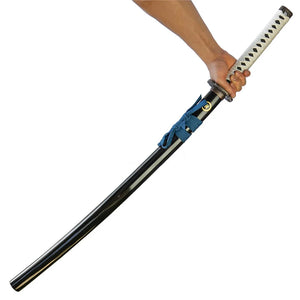
The real thing, in the sense that matters to most collectors: a blade forged from high-carbon steel, differentially hardened, sharpened, and built to the proportions and weight of a functional sword. These are the pieces that feel correct in the hand. The balance point sits where it should, the weight is where it should be, and the blade has a genuine hamon rather than an etched line imitating one.
Browse the hand-forged katana collection.
Display katana
Ornamental pieces built for a wall or a stand rather than for cutting. Blunt, lighter than a functional blade, and considerably less expensive. If the katana is going to hang above a desk or complete a room, a display piece does the job at a fraction of the cost, and because the visual difference at two metres is minimal, most buyers who want the look rather than the function are better served here.
Browse the display katana collection.
Fandom katana
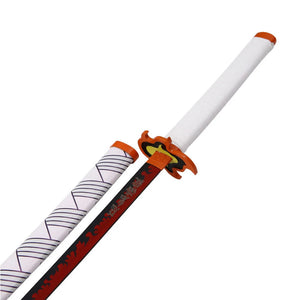
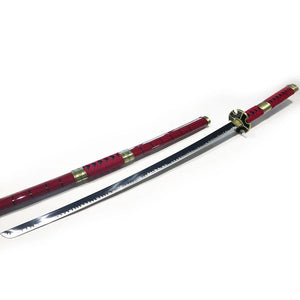
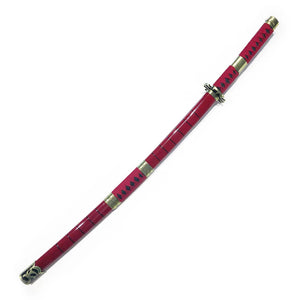
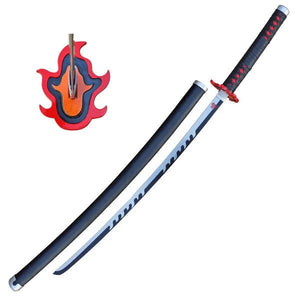
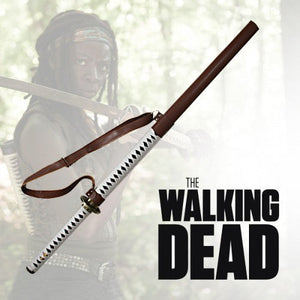
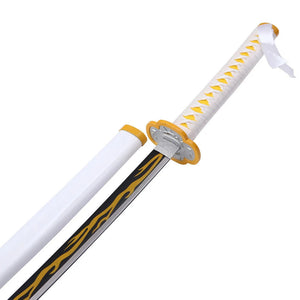
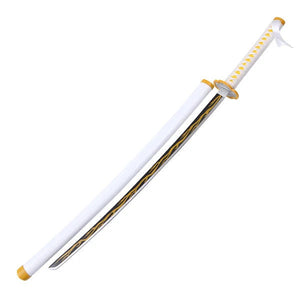
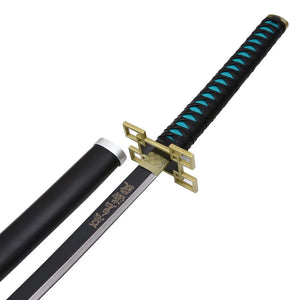
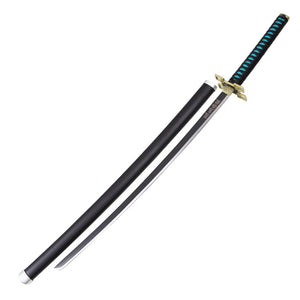
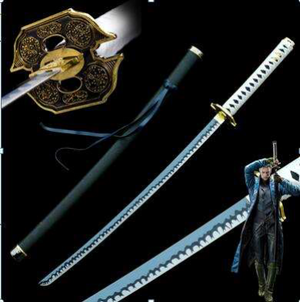
Character blades from anime, film and games. This is the fastest-growing part of our katana range and, for a lot of buyers, the reason they arrive at all: they are not shopping for "a katana", they are shopping for a specific blade belonging to a specific character.
The strongest ranges are Demon Slayer nichirin blades, One Piece swords, Bleach zanpakuto, Ghost of Tsushima katanas and the Kill Bill range. The full set sits in our anime swords collection.
Mini katana
Scaled-down katanas, typically 25 to 50cm overall. Popular as desk pieces, letter openers and collectables, and increasingly popular as gifts. They carry the whole visual identity of a katana in something that fits on a shelf and costs a fraction of a full-size blade.
Browse the mini katana collection.
The other Japanese blade types
The katana was never carried alone. Understanding the rest of the family makes collecting more rewarding, and makes a display look deliberate rather than accidental.
Wakizashi: blade of 30 to 60cm, the companion sword worn alongside the katana. It was the blade a samurai kept when the katana was left at the door, and the primary weapon indoors where a full-length katana was unusable. A matched katana and wakizashi displayed together is one of the most striking things you can mount on a wall. Browse the wakizashi collection.
Tanto: blade of 15 to 30cm. Older than the wakizashi as the standard companion blade, and the piece that sits at the crossover between Japanese swords and daggers. It reached its peak during the Kamakura period, Japan's golden age of blade-making. Browse the tanto collection.
Tachi: the katana's predecessor. Longer, more deeply curved, and worn edge-down suspended from the belt rather than edge-up through it. Primarily a cavalry weapon, displaced by the katana during the Muromachi period as infantry combat became more common.
For the full history of how these blade types developed, read our guide to Japanese swords, katana, wakizashi and tanto.
Katana sets and the daisho
The daisho, literally "big-little", is the paired katana and wakizashi that samurai wore together. During the Edo period only samurai were permitted to wear both, which made the pairing a direct marker of status.
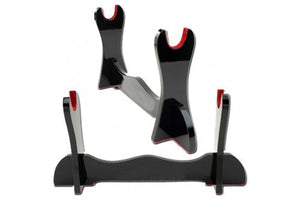
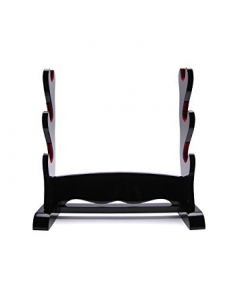
Our katana sets bring together the three core blade types (katana, wakizashi and tanto) as matched collections on a single stand. If you want one purchase that represents the whole samurai sword tradition rather than a single piece of it, this is it. For display options see our katana stands, and for complementary pieces our Japanese replicas.
Buying a katana in the UK
All buyers must be 18 or over. New customers complete a one-time age verification before their first order is dispatched.
Keeping a katana at home is one thing; carrying one in public without a good reason is an offence. For what UK law allows you to own, carry and buy, including the blades that are banned outright, read our guide to UK knife law.
Guidance only, not legal advice. If you are unsure whether a specific piece suits your circumstances, contact us before ordering.
Choosing your first katana
If it is going on a wall: buy a display katana. You are paying for appearance, and a display piece delivers the appearance.
If you want it to feel like a real sword: buy hand-forged. The weight, balance and blade geometry are the whole point, and no display replica reproduces them.
If it is for a specific character: go straight to the fandom range. Accuracy to the source design matters more than build quality to most buyers here, and the ranges are built around that.
If it is a gift and you are unsure: a mini katana or a katana set. The mini is low-risk and well received; the set looks like a considered purchase rather than a guess.
If you are building a display: start with a daisho set rather than three separate purchases. Matched fittings across the blades make a visible difference.
Further reading: why the katana is known as the soul of the samurai, how to hold and balance a katana, five common katana maintenance mistakes, how katanas became iconic in pop culture and the top ten katana wielders in movies and anime.
Why buy from The Sword Stall
Everything on this page is in our warehouse in Bacup, Lancashire. No dropshipping, no import delays, no waiting three weeks for something to clear customs. We handle what we stock and we know the difference between a good katana and a disappointing one.
Free delivery on UK orders over £200.
Frequently asked questions
Are katanas legal in the UK?
Owning a katana and keeping it at home is legal. Carrying one in public without a good reason, such as taking it wrapped to a martial arts class, is an offence. All buyers must be 18 or over. Our UK knife law guide covers the detail.
What is the difference between a katana and a samurai sword?
In everyday use they mean the same thing. Strictly, "samurai sword" is the broader term covering every blade a samurai carried (katana, wakizashi, tanto and tachi), while "katana" refers specifically to the long curved primary sword worn edge-up through the belt.
How much should I spend on a katana?
Display katanas start well under £100 and do the job if the sword is going on a wall. Hand-forged katanas cost considerably more because the blade is forged, differentially hardened and sharpened: you are buying a functional sword rather than the look of one. Mini katanas are the cheapest entry point and the safest gift.
What is a daisho?
Daisho means "big-little" and refers to the matched pair of katana and wakizashi that samurai wore together. During the Edo period only samurai were permitted to wear both. Our katana sets include the daisho plus a tanto for collectors who want the complete set on one stand.
What is the hamon on a katana?
The hamon is the visible temper line along the edge of a traditionally forged blade. Clay is applied to the spine before quenching, so the spine cools more slowly than the exposed edge, and the difference in hardness leaves a wavy or straight line across the blade. On hand-forged katanas it is a real structural feature. On mass-produced display replicas it is usually etched or printed to imitate the effect.
Can I use a katana for cosplay or at a convention?
Most conventions prohibit metal props regardless of whether they are sharpened. Check the event's weapons policy before travelling. If metal is not allowed, our cosplay weapons range has event-safe foam versions of many of the same blades.
How do I look after a katana?
Keep the blade dry, oil carbon steel lightly to prevent rust, and store it horizontally with the edge facing up. Never store a blade in a sealed scabbard in a humid room. Our guide to five common katana maintenance mistakes covers the rest.