What is a wakizashi?
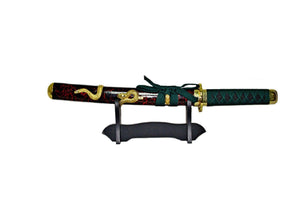
The wakizashi is defined by its blade length - typically 30 to 60cm, putting it firmly between the tanto (under 30cm) and the katana (over 60cm). This places it in a specific functional category: long enough for genuine cutting ability, short enough for use in confined spaces where the katana's length became a liability.
The longer versions - ō-wakizashi - sit close to the katana in size. The shorter versions - ko-wakizashi - approach the tanto's compactness. Most of the classic wakizashi in Japanese collections fall in the middle of this range at around 45 to 55cm blade length.
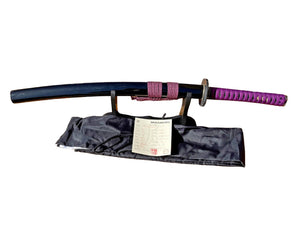
Like the katana, the wakizashi has a single-edged curved blade, a ray-skin wrapped handle, and a tsuba guard. The forging techniques are the same. The wakizashi is not a scaled-down katana - it is a distinct weapon with its own design logic, sometimes using different blade cross-sections and geometry to suit its shorter length and specific applications.
For a full comparison of the two blades, read our guide on Katana vs Wakizashi.
The wakizashi in samurai culture
The wakizashi's role in samurai life went well beyond its use as a backup weapon. A few specific contexts defined its significance.
Indoor carry. Etiquette in feudal Japan required samurai to leave their katana at the entrance when entering a lord's hall or a private home - drawing a long sword in a confined space was both impractical and threatening. The wakizashi stayed on the body. This made it the most personally significant of the two swords - the one that was never set aside.
The daisho. During the Edo period Tokugawa shogunate issued a series of regulations confirming that only members of the samurai class could wear the paired daisho in public. The right to wear both swords was a legal marker of samurai identity. Merchants, farmers and artisans - regardless of wealth - were prohibited from carrying the daisho. This gave the pair a significance beyond their function as weapons.
Seppuku. The wakizashi was the blade used in the ritual of seppuku - the formal suicide performed by samurai who had been disgraced or defeated, or who chose death over capture. The association gave the wakizashi a solemnity that the katana, despite its greater fame, did not carry in quite the same way.
For more on the wakizashi's history and uses, read What Was a Wakizashi Used For? and What is a Wakizashi? on our blog.
Hand-forged wakizashi
Our Karoshi Hand Forged Wakizashi is forged from 1095 high carbon steel - the same steel grade used in serious functional Japanese sword production. 1095 HCS has a carbon content of approximately 0.95%, giving it a good balance of hardness and toughness. It is not the complex laminated steel of a traditional nihonto, but it is a genuine step above the stainless steel used in most display replicas, and it responds differently in the hand - more visual character in the blade surface, a real hamon temper line if present, a weight that comes from the steel rather than added mass.
Check the product page for current stock availability on this piece.
Wakizashi as part of a daisho set
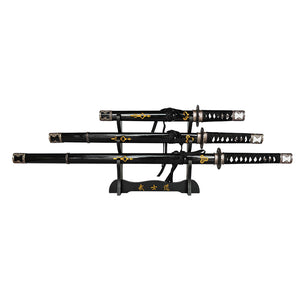
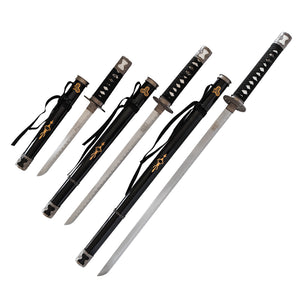
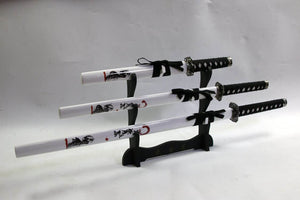
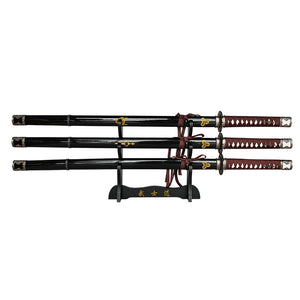
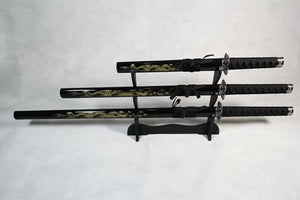
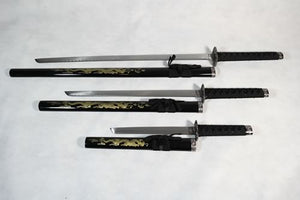
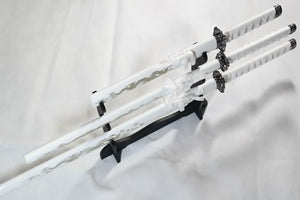
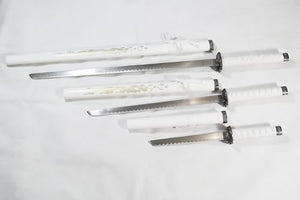
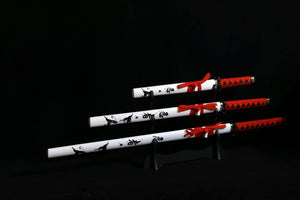
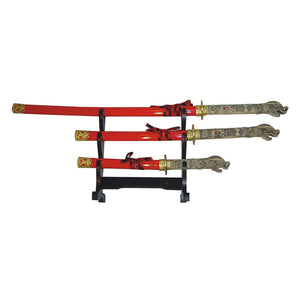
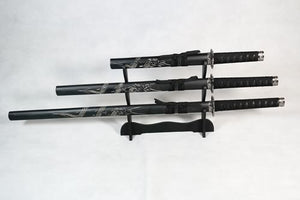
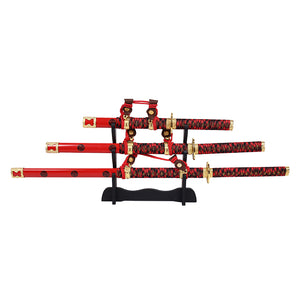
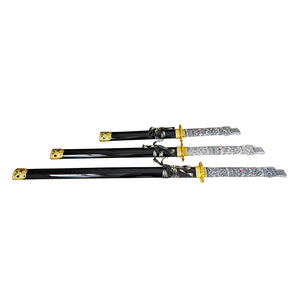
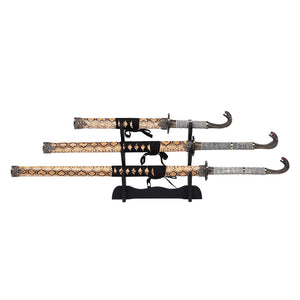
The most complete way to display a wakizashi is alongside its katana - the daisho as a matched pair on a two-tier wall mount or display stand. Our katana sets include the full three-piece daisho: katana, wakizashi and tanto, displayed together as the complete samurai sword set.
If you are building a Japanese sword collection piece by piece, the natural sequence is katana first, wakizashi second, tanto third - the order of the samurai's own priority. Browse our katana collection, tanto collection and samurai swords collection for pieces that pair with the wakizashi range.
Wakizashi and UK law
Curved swords with a blade over 50cm are subject to restrictions under the Criminal Justice Act 1988 as amended. The wakizashi's blade length - typically 30 to 60cm - means most wakizashi sit either below the restriction or close to its boundary. Our hand-forged wakizashi and display pieces comply with UK regulations. All buyers must be 18 or over. New customers provide age verification once before their first order is dispatched.
For a full explanation of UK Japanese sword law, read our Japanese swords UK guide.
About The Sword Stall
UK-based, UK-stocked. Everything in this collection is in our warehouse in Bacup, Lancashire - no dropshipping, no customs complications, no import delays. Free delivery on orders over £200. All display pieces are blunt ornamental replicas intended for display only.